
Why air leakage, insulation, and ACH50 matter in Chicago homes and condos
Chicago homes have a building problem, not just an HVAC problem
If your Chicago home is too hot upstairs, too cold downstairs, drafty in winter, humid in summer, or expensive to heat and cool, the problem is probably not just your furnace or air conditioner. In many Chicago homes, the real issue is the building itself.
Air leakage, poor insulation, attic bypasses, under-insulated knee walls, leaky rim joists, inadequate attic ventilation, and missing air sealing can force your HVAC system to work harder than it should. That means larger equipment, higher utility bills, uneven temperatures, more humidity issues, and less year-round comfort.
At Chicago Green Insulation, we help homeowners understand what is really happening inside the house before they spend money on another oversized furnace, air conditioner, mini-split, or temporary comfort fix.
Why ACH50 matters in Chicago homes
 ACH50 is a blower-door test measurement that indicates how leaky your home is. It measures how many times per hour the air inside your home is replaced when the house is tested at a 50 Pascal pressure difference.
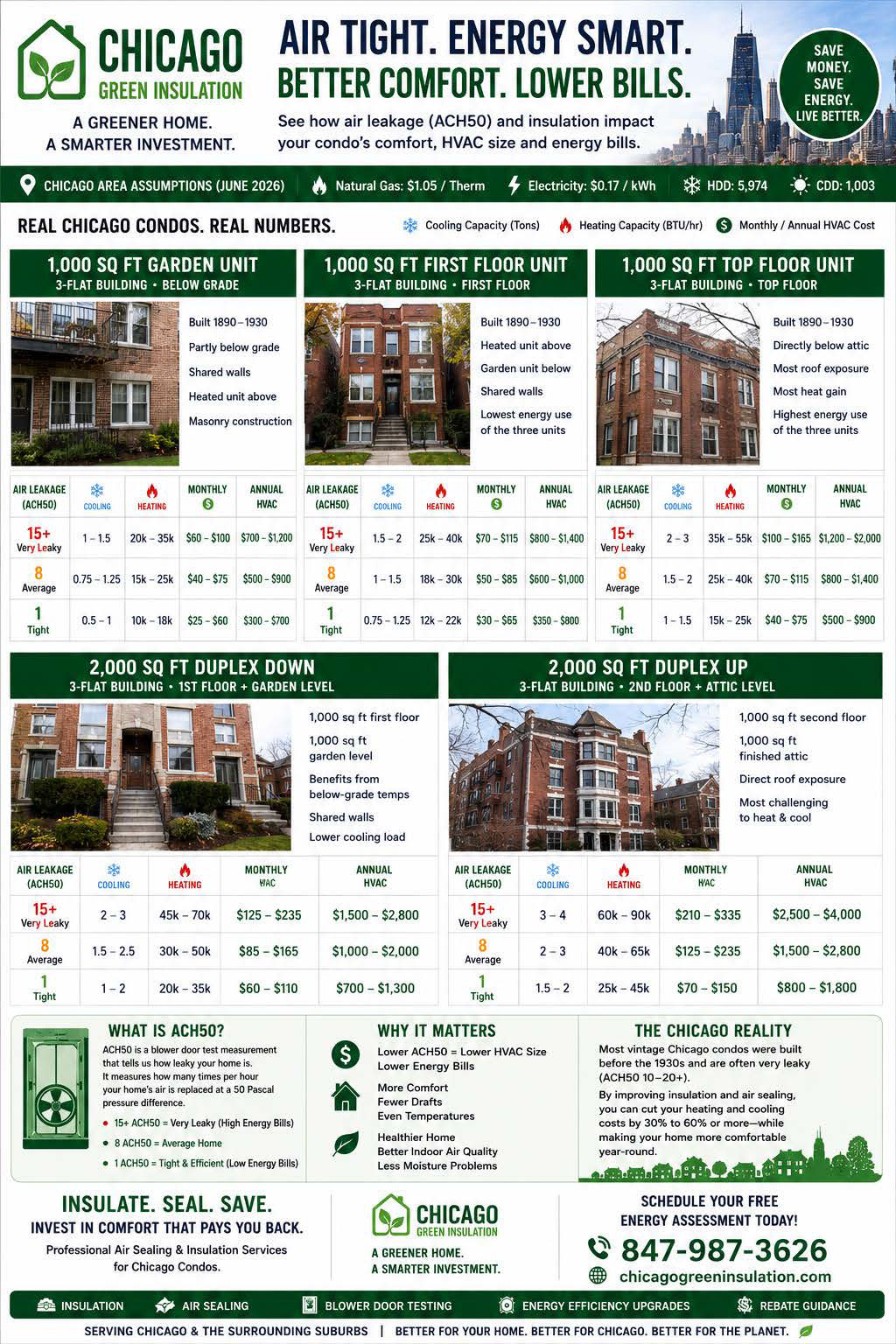
In simple terms, a home with 15 ACH50 or higher is very leaky. A home around 8 ACH50 is common for many older Chicago homes. A home near 1 ACH50 is tight, efficient, and high-performing.
Most Chicago-area homes built before the 1980s were not built to modern air-sealing standards. Many vintage bungalows, ranches, Cape Cods, three-flats, duplex condos, and brick two-flats leak far more air than homeowners realize. That leakage can dramatically increase heating and cooling costs.
The real Chicago problem is comfort, not just energy bills
Most homeowners call us because of comfort. The upstairs is hot. The bedrooms are freezing. The basement feels damp. The attic smells musty. The kids’ rooms are uncomfortable. The HVAC system runs constantly. The house never feels right.
These are not always equipment problems. They are often insulation and air leakage problems.
When outside air is constantly entering through the attic, basement, crawlspace, rim joists, plumbing penetrations, recessed lights, knee walls, and wall cavities, your HVAC system is fighting the house itself.
That is why a 1,000-square-foot top-floor condo may cost more to heat and cool than a larger first-floor unit. It is why a finished attic in a Chicago bungalow can be brutal in summer. It is why a 2,400-square-foot ranch with a leaky basement can require far more heating capacity than a tighter, better-insulated home of the same size.
Frequently asked questions
 Why is my upstairs so hot in the summer? Heat gain through the roof, poor attic insulation, air leaks, knee walls, and inadequate air sealing are common causes. In many Chicago homes, the attic is the biggest source of comfort problems.
Will adding more insulation fix everything? Not by itself. Insulation works best when paired with air sealing. If air can move around or through the insulation, performance drops dramatically.
Should I replace my HVAC system first? Not always. If the home is leaky and poorly insulated, new equipment may still struggle. Improving the building envelope first can reduce the heating and cooling load, sometimes allowing for smaller, more efficient HVAC equipment.
Why is my condo so expensive to heat and cool? Location matters. Garden units, middle units, top-floor units, duplex downs, and duplex ups all perform differently. Top-floor and attic-level units usually have the most roof exposure and the highest heat gain. Garden units may have lower cooling loads, but more concerns about basements, moisture, and air leakage.
What is the best insulation for Chicago homes? It depends on the house. Spray foam, dense-pack cellulose, attic air sealing, rim joist insulation, crawlspace encapsulation, and targeted thermal boundary work all have a place. The right solution depends on the home’s age, structure, leakage rate, moisture conditions, and comfort issues.
Can air sealing and insulation really lower bills? Yes. In many Chicago homes, reducing air leakage and improving insulation can cut heating and cooling costs by 30 percent to 50 percent or more while making the home more comfortable.
Why Chicago Green Insulation should be your next call
Chicago Green Insulation understands Chicago homes because we work in them every day. We know bungalows, ranches, Cape Cods, three-flats, top-floor condos, duplex ups, duplex downs, crawlspaces, finished attics, masonry walls, rim joists, and old rooflines. We know where these homes leak. We know why they are uncomfortable. And we know how to fix them properly.
Our work includes professional air sealing, spray foam insulation, cellulose insulation, blower door testing, attic upgrades, rim joist insulation, crawlspace solutions, bath fan venting, energy efficiency upgrades, and rebate guidance.
This is not about selling you more insulation. It is about making your home work better.
A tighter, better-insulated home can mean lower energy bills, smaller HVAC loads, fewer drafts, better indoor air quality, better humidity control, and more even temperatures from room to room.
If your home is uncomfortable, expensive to operate, or impossible to balance, do not guess. Call Chicago Green Insulation today. Schedule your free energy assessment at 847-987-3626 or visit chicagogreeninsulation.com.
 With ten years of experience selling spray foam insulation in Chicago, Tom Decker is THE person to call and the Chicago Green Insulation is the organization to hire when you are looking for top notch quality and performance as well as someone who can deal with the needs of code officials, home owners and general contractors. Call the others in Chicago, if you are interested in the cheapest price, call Chicago Green Insulation if you are interested in using your dollars to make Chicago a better city for all of us!


 Chicago Green Insulation
 Chicago Green Insulation
 Chicago Green Insulation
 Chicago Green Insulation


